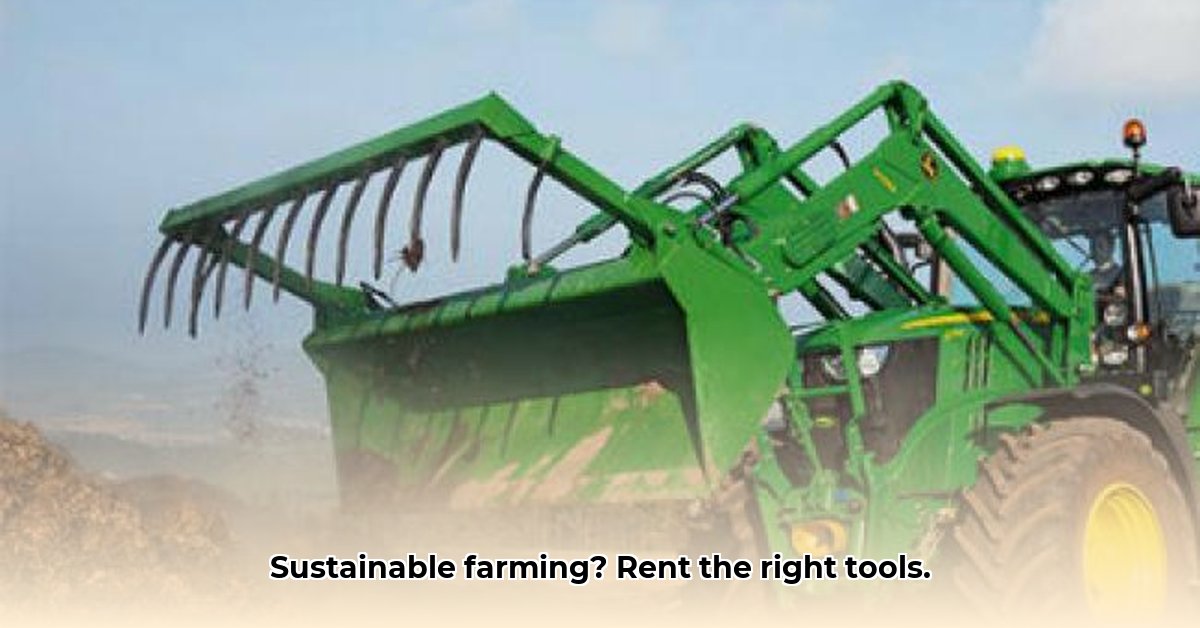
Rent Tractor Implements: Farming's Green Revolution
Farming is evolving. Rising costs and environmental concerns are forcing a shift towards more sustainable practices. For many farmers, the high cost of purchasing new tractors and specialized implements presents a significant hurdle. However, a growing number are discovering that renting farm equipment offers a financially savvy and environmentally responsible solution. This article explores the benefits of renting tractor implements, highlighting its contribution to sustainable agriculture, addressing the challenges, and outlining actionable steps for all stakeholders involved. For smaller operations, consider small tractors.
The Rise of Specialized Agricultural Machinery
Modern agriculture demands diversity. The days of a single farmer using a basic plow are long gone. Today, we see a surge in specialty crops—from heirloom tomatoes to industrial hemp and medicinal cannabis—requiring a specialized array of equipment. Greenhouse operations, for example, necessitate climate control and handling equipment vastly different from traditional field farming. Even livestock management is increasingly automated, relying on sophisticated technology. The sheer cost of acquiring this specialized equipment poses a significant challenge for many farmers.
Renting Tractor Implements: A Sustainable Choice
Renting tractor implements emerges as a compelling solution. It's a practical and environmentally conscious approach for several reasons.
Firstly, it significantly reduces the environmental footprint. Farmers can access the most fuel-efficient and technologically advanced machinery without the hefty upfront costs. This allows for optimized resource use and minimizes emissions.
Secondly, it's economically advantageous. Renting avoids the substantial initial investment associated with purchasing equipment, freeing up capital for reinvestment in other crucial areas of the farm business.
Thirdly, renting offers remarkable flexibility. Farmers only rent what they need, when they need it, eliminating the burden of storing and maintaining idle equipment. This adaptability is particularly beneficial for farmers engaging in short-term projects or experimenting with new crops.
Precision agriculture, a cornerstone of sustainable farming, often necessitates specialized equipment. Renting makes this technology accessible to a broader range of farmers, regardless of their financial resources.
Navigating the Challenges and Opportunities
While the advantages of renting are clear, challenges remain. One significant hurdle is accessing truly sustainable equipment. The industry needs more transparent data on the environmental impact of rental practices, from fuel consumption to transportation. Furthermore, rental companies must actively invest in low-emission equipment and implement robust tracking mechanisms to minimize their ecological footprint. The focus should shift from simply renting implements to renting a sustainable future for agriculture itself.
Actionable Steps Towards a Greener Future
Achieving true sustainability requires collaborative efforts from all stakeholders. Here's a breakdown of practical steps:
For Equipment Rental Companies:
- Invest in comprehensive data collection: Track and analyze fuel consumption, emissions, and other environmental impacts to identify the most efficient equipment and optimize operations.
- Modernize the fleet: Transition to lower-emission equipment, exploring alternative energy sources such as electric or hybrid models.
- Foster industry collaboration: Partner with equipment manufacturers to accelerate the development and adoption of sustainable technologies.
For Farmers and Agricultural Businesses:
- Conduct a thorough cost-benefit analysis: Compare the total cost of owning versus renting equipment, considering long-term financial implications.
- Embrace precision agriculture techniques: Utilize technology to maximize efficiency and minimize waste.
- Prioritize sustainable providers: Select rental companies with demonstrable environmental commitments and transparency.
For Government Agencies:
- Offer financial incentives: Provide grants or tax breaks to farmers adopting sustainable equipment rental programs.
- Implement clear environmental guidelines: Develop regulations encouraging environmentally friendly practices within the rental industry.
For Equipment Manufacturers:
- Prioritize responsible innovation: Design equipment that optimizes resource use and minimizes emissions.
- Invest in renewable energy research: Explore alternative fuel sources and sustainable materials.
The Regulatory Landscape and its Impact
Government regulations, especially concerning environmental protection in agriculture, are in constant flux. New rules and standards will significantly influence the equipment rental market. Staying informed about these changes is crucial for both rental businesses and farmers to make well-informed decisions. The regulatory framework should incentivize sustainable practices and ensure fair competition.
Choosing a Sustainable Equipment Provider
Selecting a responsible rental company requires diligence. Look for providers who transparently communicate their environmental commitments and provide data on equipment fuel efficiency and emissions. Don't hesitate to inquire about their sustainability initiatives. Supporting businesses committed to sustainability contributes to a greener future for farming.
The Future of Sustainable Equipment Rentals
Sustainable practices are fundamental to the future of agriculture. Renting tractor implements provides a pathway to a more ecologically responsible sector, but this requires collective action. Rental companies, farmers, policymakers, and manufacturers must collaborate to build a sustainable agricultural future. The potential for positive change is significant, and decisive action is needed now.
How to Reduce Carbon Footprint of Agricultural Equipment Rentals
Key Takeaways:
- Renting farm equipment can significantly reduce your environmental impact compared to ownership.
- Sustainable practices like precision farming lower emissions and resource consumption.
- Choosing fuel-efficient equipment and optimizing its use are crucial for minimizing your carbon footprint.
- Government support and incentives can accelerate the adoption of sustainable practices.
- Collaboration between stakeholders is vital for creating a greener future in agriculture.
The Smart Farmer's Choice: Renting for Sustainability
Climate change necessitates smarter farming practices. A significant step is reconsidering how machinery is acquired. Owning all equipment is expensive and resource-intensive, while renting presents a surprisingly eco-friendly alternative. Let's explore effective strategies for minimizing the carbon footprint of agricultural equipment rentals.
Specialized Equipment: A Greener Approach
Modern farming's diversity requires specialized tools for optimal efficiency and sustainability. Renting allows access to cutting-edge technology without the massive upfront costs. Consider needing a precision sprayer for a single season – renting eliminates the burden of owning equipment used only occasionally, reducing your overall carbon footprint.
Rentals and Sustainable Practices: A Perfect Match
Renting isn't merely about cost reduction; it's about minimizing environmental damage. Modern rental companies increasingly embrace sustainable practices, investing in fuel-efficient models and promoting environmentally conscious operational methods. Shared responsibility for equipment maintenance and proper usage further enhances sustainability.
The Challenges, and How We Meet Them
While renting provides many benefits, ensuring efficient equipment usage and proper maintenance is paramount. To understand the overall environmental impact, more comprehensive data collection and reporting systems are needed. Collaboration between rental companies and farmers is crucial to overcome these challenges.
Steps to a Greener Rental Strategy
- Prioritize fuel-efficient equipment: Select machines with lower emissions and higher fuel efficiency ratings.
- Implement preventative maintenance: Well-maintained equipment operates more efficiently, reducing fuel consumption and emissions.
- Optimize equipment usage: Careful planning of work minimizes unnecessary travel and idling time.
- Explore renewable fuels: Inquire about the availability and feasibility of using biodiesel or other sustainable fuels.
- Support committed rental providers: Choose companies actively committed to sustainable practices and transparency.
Policy and the Future of Green Rentals
Government support is essential. Incentives for farmers to use sustainable equipment, combined with stricter regulations on older, less efficient machinery, will significantly influence the future of agriculture. Subsidies for renting eco-friendly tractors, for example, could accelerate the transition to more sustainable practices.